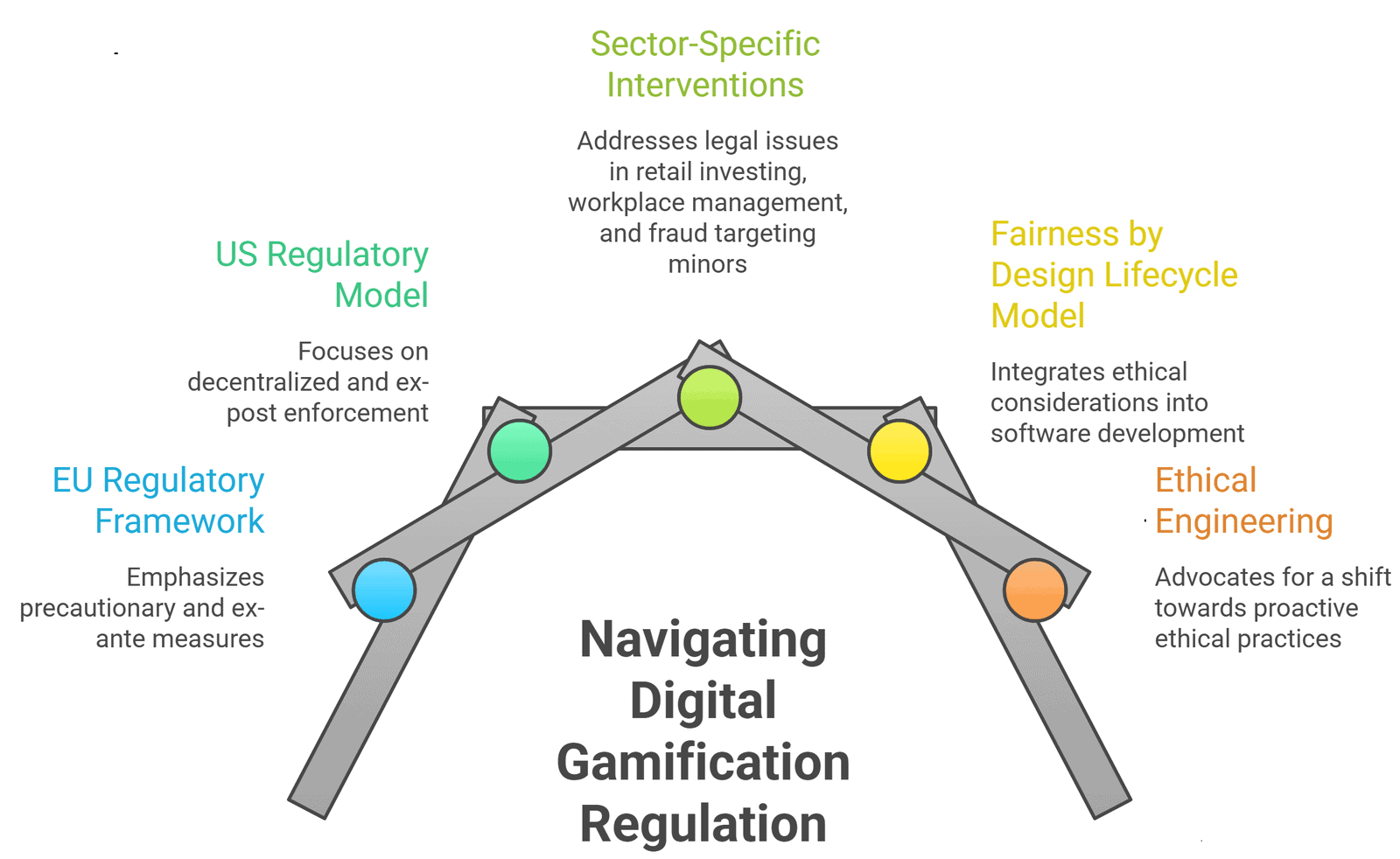
Gamification has evolved from a simple user engagement strategy into a complex behavioral architecture capable of exploiting cognitive biases. The aggressive expansion of the global gamification market has precipitated a rise in manipulative digital interfaces, commonly known as dark patterns, across finance, labor, and youth oriented digital ecosystems. This article provides a comprehensive global regulatory analysis of the recent legal and ethical transformations surrounding digital gamification between. It contrasts the European Union’s precautionary and ex-ante regulatory frameworks, specifically the Digital Services Act and the proposed Digital Fairness Act, with the decentralized and ex-post enforcement model utilized in the United States. Furthermore, this study evaluates sector specific legal interventions addressing digital engagement practices in retail investing, algorithmic workplace management, and gamified fraud targeting minors. To bridge the gap between emerging regulatory mandates and practical software engineering, this article introduces a new Fairness by Design lifecycle model. By synthesizing the ETHIC framework and IEEE 7000 series standards into the conventional Software Development Life Cycle, the research provides an operational blueprint for embedding algorithmic accountability directly into the gamification development process. The study concludes that sustainable market leadership necessitates a paradigm shift from engagement centric metrics toward proactive ethical engineering.
Ozmen HB. Global regulatory trends in gamification and practical pathways for digital fairness, Res. Des. 2026; 3(1): 1-15. DOI: http://dx.doi.org/10.17515/rede2026-018ga0223rs