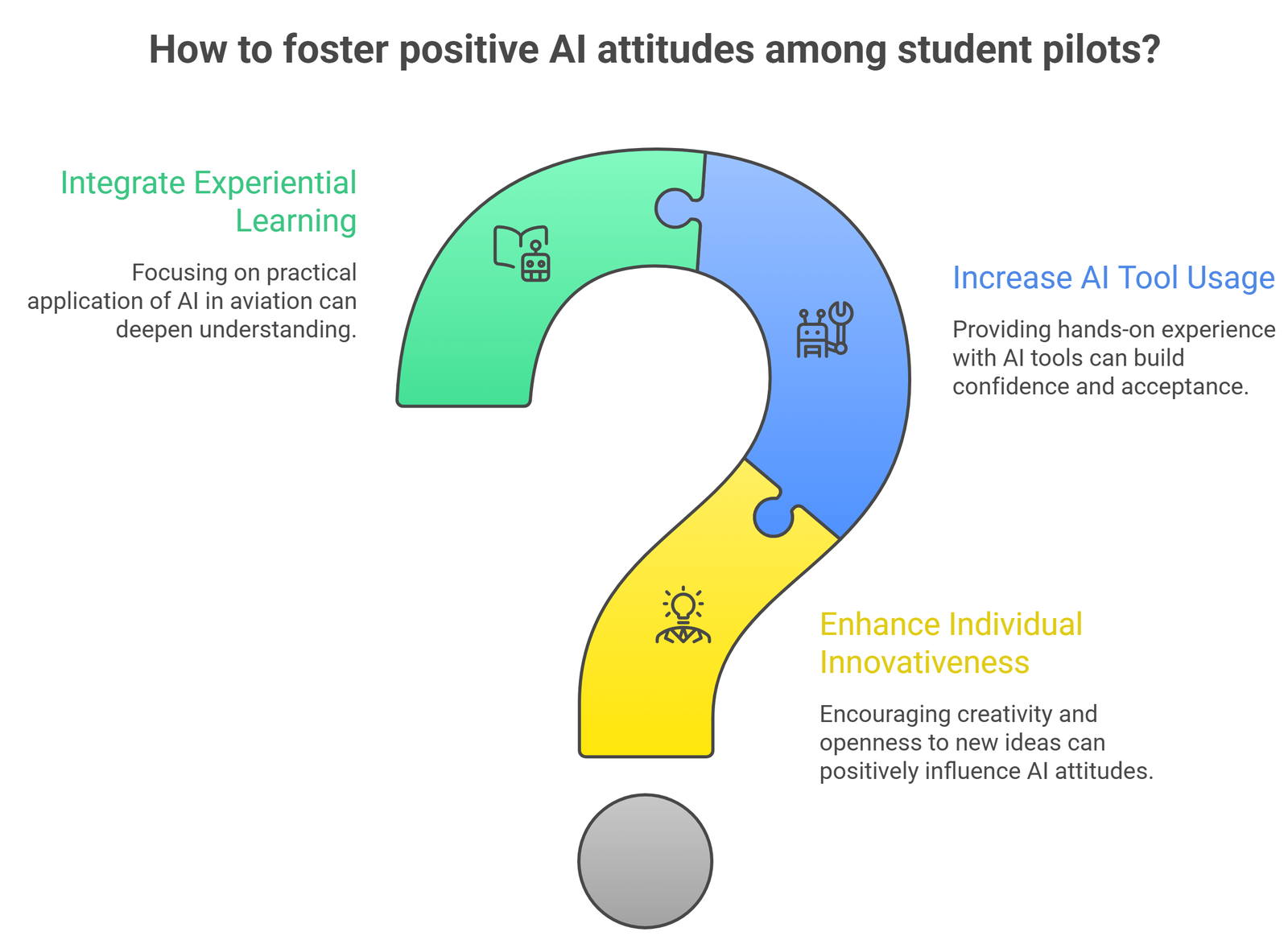
This study examines the relationships among individual innovativeness, use of AI-based tools, and attitudes toward AI among student pilots. Drawing on technology acceptance and human–AI interaction perspectives, the study aims to identify how both dispositional and experiential factors shape AI attitudes in a high-technology domain. Data were collected from 204 student pilots in Türkiye using a convenience sampling method. The study employed validated scales to measure individual innovativeness and attitudes toward AI. The collected data were analyzed using descriptive statistics, correlation analysis, reliability tests, and path analysis. The results indicate that individual innovativeness has a positive and significant effect on attitudes toward AI, while the use of AI-based tools emerges as a stronger predictor. Additionally, a small but significant relationship was found between innovativeness and AI usage. These findings suggest that attitudes toward AI are shaped by both personal tendencies and direct interaction with AI technologies. The study contributes to the literature by integrating human–AI interaction and technology acceptance perspectives in the aviation context and highlights the importance of experiential learning and psychological readiness for effective AI integration.
Çeken S, Tuncal A. Individual innovativeness and attitudes toward artificial intelligence among student pilots, Res. Des. 2026; 3(1): 51-63. DOI: http://dx.doi.org/10.17515/rede2026-026da0505rs